
Introduction
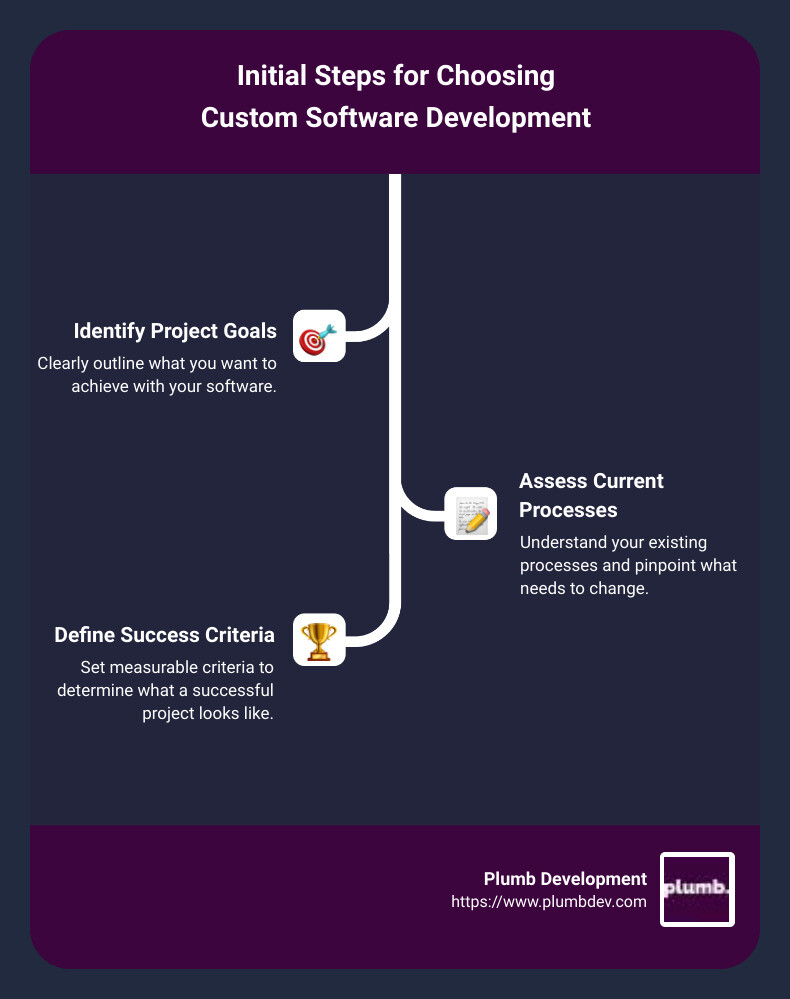
When considering how to choose custom software development, the first steps are understanding your needs and clearly defining your project scope. This involves laying out what problem you're trying to solve, who the end-users are, and what specific features and functionalities are essential.
To get you moving quickly:
- Identify your project goals: Be clear on what you want to achieve.
- Assess your current process: Know where things stand now and what must change.
- Define success criteria: Understand what a successful project will look like for you.
Choosing the right custom software development firm can seem daunting, but getting these initial steps right will make the rest of the journey much smoother.
Why Custom Software Development?
When you choose custom software development, you unlock a world of benefits that off-the-shelf solutions simply can't offer. Let's break down the key advantages:
Control
Total Control Over Features and Design
With custom software, you have complete control over the features, functionality, and design. You won't be stuck with unnecessary features that you don't need or use, which is often the case with commercial software.
For example, if you run a retail business, you might need a specific inventory management feature that integrates seamlessly with your existing systems. Custom software allows you to specify exactly what you need, ensuring the final product is perfectly tailored to your business.
Optimization
Tailored for Efficiency
Custom software is designed to fit your specific business processes, making your operations more efficient. According to Quora, a custom solution can be more productive and cost-effective in the long run because it eliminates the need for constant adjustments and modifications.
Imagine a logistics company that needs a robust tracking system. Off-the-shelf software might require multiple add-ons or workarounds to meet their needs. A custom solution, however, would streamline operations, reducing time and cost inefficiencies.
Technological Evolution
Staying Ahead with the Latest Tech
One of the biggest advantages of custom software is that it can be built using the latest technologies, ensuring your business stays ahead of the curve. According to LinkedIn, using up-to-date technologies not only enhances performance but also improves security and scalability.
For instance, a financial services firm might need advanced encryption and secure APIs to protect sensitive data. Custom software can incorporate these needs from the ground up, providing a more secure and scalable solution compared to generic software.
Competitive Advantage
Stand Out in the Market
Custom software can give you a significant competitive edge. When your competitors use standard software, your custom solution can offer unique features that set you apart. As highlighted in Quora, the element of personalization helps you stand out in a crowded marketplace.
Consider a healthcare provider that needs a unique patient management system. Custom software can offer features like personalized patient dashboards and seamless integration with medical devices, enhancing patient care and operational efficiency.
Security
Enhanced Security Measures
Custom software is generally more secure than commercial software because it is less likely to be targeted by hackers. As noted in Quora, hackers usually target widely-used commercial software, making custom solutions a safer choice.
For example, an e-commerce platform with custom-built security features can better protect customer data, reducing the risk of breaches and enhancing customer trust.
By understanding the unique benefits of custom software development, you can make an informed decision that aligns with your business goals and needs. Next, we'll dive into how to choose the right technology for your project.
How to Choose the Right Technology for Your Project
Choosing the right technology for your custom software project can be daunting. Here’s a straightforward guide to help you make an informed decision.
Project Size
Small Projects: For smaller projects, like simple web applications or basic mobile apps, lightweight technologies such as Python or Ruby on Rails can be ideal. They offer rapid development and ease of use.
Large Projects: For larger, more complex projects, consider robust technologies like Java or .NET. These are scalable and can handle extensive data and user interactions.
Complexity
Simple Applications: For straightforward applications, you don't need overly complex technologies. PHP or JavaScript frameworks like React can get the job done efficiently.
Complex Systems: For more intricate systems involving multiple integrations and high data processing, technologies like Node.js or Golang are better suited. They offer high performance and scalability.
Development Speed
Rapid Development: If speed is a priority, frameworks like Django (Python) or Laravel (PHP) are excellent. They come with built-in tools that speed up the development process.
Balanced Approach: For projects where both speed and performance matter, consider using Angular or Vue.js for the frontend and Node.js for the backend. This combination provides a good balance of speed and efficiency.
Cost
Budget-Friendly: Open-source technologies like MySQL or PostgreSQL can save costs on database management. For coding, consider using PHP or Python, as they have large communities and free resources.
Investment Worthy: If budget allows, investing in enterprise-level technologies like Oracle or Microsoft SQL Server can offer advanced features and robust support.
Specialist Availability
Common Technologies: Choosing popular technologies like JavaScript or Python ensures a larger pool of developers. This can make hiring easier and more affordable.
Niche Expertise: For specialized needs, like artificial intelligence or blockchain, you might need to look for experts in specific technologies like TensorFlow (AI) or Solidity (blockchain). Be prepared for higher costs due to the specialized skills required.
Development Tools
Integrated Development Environments (IDEs): Tools like Visual Studio (for .NET) or PyCharm (for Python) can significantly enhance productivity. They offer features like code completion, debugging, and version control integration.
Collaboration Tools: Use platforms like GitHub or Bitbucket for version control and collaboration. These tools are essential for managing code and working with a team.
Solution Flexibility
Adaptability: Technologies like JavaScript (using frameworks like Node.js) are highly adaptable. They can be used for both frontend and backend development, offering flexibility in project requirements.
Future-Proofing: Choose technologies that are continuously evolving. For instance, opting for cloud-based solutions like AWS or Azure ensures that your application can scale and adapt to future needs.
By carefully considering these factors, you can choose the right technology that aligns with your project’s size, complexity, and goals. In the next section, we'll explore how to select the best development methodology for your custom software project.
Selecting the Best Development Methodology
Choosing the right development methodology is crucial for the success of your custom software project. Here's how to assess your project requirements, compare methodologies, evaluate their pros and cons, and select the best fit.
Project Requirements Assessment
Start by understanding your project’s unique needs:
- Scope and Goals: Clearly define what you want to achieve.
- Timeline: Determine your deadlines.
- Budget: Know your financial limits.
- Flexibility: Assess how much you can adapt to changes during the project.
Methodology Comparison
There are several methodologies to choose from, each with its own strengths and weaknesses. Here’s a quick comparison of the most popular ones:
Pros and Cons Evaluation
Let’s break down the pros and cons further:
Agile
Pros:- Flexibility: Easily adapt to changes.- Client Involvement: Regular feedback ensures the project meets expectations.- Continuous Improvement: Iterative releases allow for ongoing enhancements.
Cons:- Resource-Intensive: Requires constant involvement from the client and team.- Unpredictable: Can be challenging to predict the final cost and timeline.
Waterfall
Pros:- Simplicity: Easy to understand and manage.- Clear Milestones: Well-defined stages make tracking progress straightforward.
Cons:- Inflexible: Hard to accommodate changes once the process starts.- Risk of Obsolescence: Long development cycles can lead to outdated solutions.
Best Fit Selection
To select the best methodology, consider the following:
- Project Nature: Is your project well-defined or does it require flexibility?
- Team Experience: Do your developers have experience with a specific methodology?
- Client Involvement: Can your client commit to regular check-ins and feedback?
- Timeline and Budget: Do you have strict deadlines and budget constraints?
Case Study Spotlight:
Imagine a company that needed to develop a custom CRM system. They chose the Agile methodology because it allowed them to incorporate client feedback at every stage. This iterative process ensured the final product met all their specific needs and could adapt to any changes in requirements.
By carefully assessing your project requirements and comparing methodologies, you can select the best fit for your custom software development project. Next, we’ll explore how to find the ideal software development company that aligns with your project needs.
Finding the Ideal Software Development Company
Choosing the right custom software development company is crucial for your project's success. Here are key factors to consider:
Company Expertise
First, you want a company with the right expertise. Look for firms that have a deep understanding of your industry and specific needs. This ensures they can provide solutions tailored to your requirements. For example, if you need a CRM system, find a company that has built similar systems before.
Portfolio Review
A company's portfolio can tell you a lot about their capabilities. Reviewing their past projects helps you gauge the quality of their work and see if they've handled projects similar to yours. A strong portfolio indicates experience and reliability.
Pro Tip: A company with a diverse portfolio is often more adaptable to different project needs.
Client Testimonials
Client testimonials offer valuable insights into a company's performance. Positive reviews can confirm that the company delivers high-quality work and maintains good client relationships. Look for testimonials that highlight the company's ability to meet deadlines, communicate effectively, and provide ongoing support.
"Working with [Company Name] was seamless. They delivered our project on time and exceeded our expectations." - Satisfied Client
Development Process
Understanding a company's development process is essential. A well-defined process ensures that your project will be completed efficiently and to a high standard. Ask about their methodologies, such as Agile or DevOps, and how they incorporate client feedback. A transparent development process with regular updates can help avoid surprises and keep the project on track.
Security Practices
Security is non-negotiable. Ensure the company follows strict security protocols to protect your data. They should comply with industry standards and regulations to minimize the risk of data breaches. Inquire about their security measures, such as encryption, access controls, and regular security audits.
By focusing on these aspects, you can find a software development company that aligns with your needs and ensures a successful project. Next, we'll delve into key considerations in custom software development to help you make an informed decision.
Key Considerations in Custom Software Development
When choosing a custom software development firm, several factors play a crucial role in ensuring a successful partnership. Let's break down the key considerations:
Portfolio and Experience
Domain Expertise: Look for a company with a strong portfolio that showcases their experience in your industry. This helps ensure they understand your unique needs and challenges.
Similar Projects: Review their past projects to see if they have completed similar tasks. This indicates they have the necessary skills and knowledge to handle your project efficiently.
For example, a firm experienced in developing fintech solutions will be more adept at handling complex financial regulations and security requirements.
Testimonials and Referrals
Client Feedback: Customer reviews are a valuable resource. Positive testimonials indicate high-quality service and customer satisfaction.
Quality Indicator: Look for detailed feedback on their problem-solving abilities, communication, and project outcomes.
“Working with Plumb Development was a game-changer for our business. They listened to our needs, crafted a strategy that was spot-on, and helped us achieve results beyond our expectations.”
Industry-Specific Experience
Niche Knowledge: A firm with experience in your specific industry will be familiar with the latest trends, competitors, and regulatory requirements.
Custom Solutions: They can offer tailored solutions that address your unique business challenges. For instance, a healthcare-focused development firm will know how to navigate HIPAA compliance.
Technology Stack
Tech Suitability: Ensure the company uses a technology stack that aligns with your project requirements. This can impact the scalability, performance, and maintenance of your software.
Innovation: Choose a firm that stays updated with the latest technological advancements. This ensures your software remains competitive and future-proof.
Cultural Fit and Communication
Collaboration: Effective collaboration is essential for a successful project. The firm should be willing to work closely with your team and understand your business goals.
Effective Communication: Clear and consistent communication helps avoid misunderstandings and keeps the project on track. Regular updates and transparent processes are key.
Competencies and Skills
Technical Proficiency: The firm should have a team of skilled developers proficient in the necessary programming languages and tools.
Project Management: Strong project management skills ensure the project stays on schedule and within budget. Look for firms that follow best practices like Agile or Scrum methodologies.
Workflow and Pricing
Development Process: Understand their development process and how they handle project pipelines. A structured workflow ensures timely delivery and quality outcomes.
Budget Alignment: Ensure their pricing aligns with your budget without compromising on quality. Transparent pricing models help avoid unexpected costs.
By considering these factors, you can make an informed decision and choose a custom software development firm that meets your needs. Next, we'll answer some frequently asked questions to further guide you in your decision-making process.
Frequently Asked Questions about Custom Software Development
Why choose custom software development?
Choosing custom software development is like getting a tailored suit. It fits perfectly and meets your unique needs. Here’s why it stands out:
- Tailored Solutions: Custom software is designed to fit your specific business processes and requirements. This means higher efficiency and better user experience compared to generic software.
- Enhanced Security: Custom software can be built with security in mind from the ground up, making it more secure than off-the-shelf options.
- Scalability: As your business grows, custom software can be scaled to meet new demands without major overhauls.
- Support and Maintenance: A custom software development company provides ongoing support and maintenance, ensuring the software evolves with your business needs.
- Competitive Advantage: Custom software can give you a competitive edge by addressing your unique business challenges in ways that off-the-shelf solutions cannot.
How to ensure a software development project's success?
Ensuring the success of a custom software development project involves several key steps:
- Clear Requirements: Start with a clear understanding of your needs and document them thoroughly. This helps avoid scope creep and miscommunication.
- Choose the Right Partner: Select a development company with a strong track record, relevant expertise, and a transparent communication process. Look for companies that have experience in your industry.
- Effective Project Management: Use proven methodologies like Agile or Scrum to manage the project. This allows for regular updates, feedback, and adjustments.
- Regular Communication: Maintain open lines of communication with the development team. Weekly progress reports and regular demos can keep everyone on the same page.
- Quality Assurance: Implement robust testing procedures to catch bugs and issues early. This includes unit testing, integration testing, and user acceptance testing.
- Flexible and Adaptive: Be prepared to adapt to changes. Market conditions and business needs can evolve, and your software should be able to keep up.
What are the long-term benefits of custom software?
Investing in custom software development offers several long-term advantages:
- Cost Efficiency: While the initial investment might be higher, custom software can save money in the long run by reducing the need for multiple licenses and subscriptions.
- Business Growth: Custom software can scale with your business, supporting new features and functionalities as your needs evolve.
- Improved Productivity: Tailored solutions streamline operations, reduce manual work, and improve overall productivity.
- Better Decision Making: Custom software can be designed to provide valuable insights and analytics, helping you make informed business decisions.
- Customer Satisfaction: By providing a better user experience and meeting specific customer needs, custom software can enhance customer satisfaction and loyalty.
By understanding these key aspects, you can make an informed decision and ensure a successful custom software development project. Next, we'll dive into Plumb Development's approach to empowering clients through custom software solutions.
Conclusion
Choosing the right custom software development firm is a critical decision. It can greatly impact your business’s success and efficiency. We've covered the essential steps to help you make an informed choice, from understanding your needs to evaluating potential partners.
Making an informed choice involves several key factors:
- Defining your requirements: Clearly outline what you need, including scope, budget, and timeline.
- Researching potential companies: Look for a strong track record, relevant experience, and positive client reviews.
- Evaluating expertise and technologies: Ensure the company can meet your technical needs.
- Communication and collaboration: Choose a company that communicates well and collaborates effectively.
- Cost and value: Compare pricing structures and ensure you get good value.
- Legal and contractual considerations: Review contracts and agreements to protect your interests.
At Plumb Development, we pride ourselves on empowering clients through tailored software solutions. Our approach focuses on understanding your unique needs and delivering high-quality, scalable applications. We prioritize:
- Comprehensive understanding: From server environments to user experience design, we cover all development layers.
- Security and reliability: Implementing the latest security practices to protect your data.
- Client collaboration: Maintaining transparent communication and involving you throughout the development process.
- Ongoing support: Offering post-development support to ensure your software remains functional and up-to-date.
By partnering with us, you can be confident that your custom software will be a perfect fit for your business, enhancing efficiency and driving success. Ready to take the next step? Learn more about our custom software solutions and how we can help your business thrive.