
Introduction
What is custom software development? It's the process of designing and creating software tailored specifically to the needs of a specific user group, company, or function. Unlike off-the-shelf software, custom software is built to address unique challenges and requirements, providing a perfect fit for the intended use.
Custom software development matters because it allows businesses to optimize operations, enhance user experiences, and gain competitive advantages. This tailored approach ensures that software not only meets the specific operational needs but also grows and adapts with the business. It's a crucial strategy for companies aiming to stand out in today’s market.
Why prioritize custom software? For a business, it means having software that:- Works exactly how you need it to.- Integrates seamlessly with existing systems.- Adapts and scales as your business evolves.
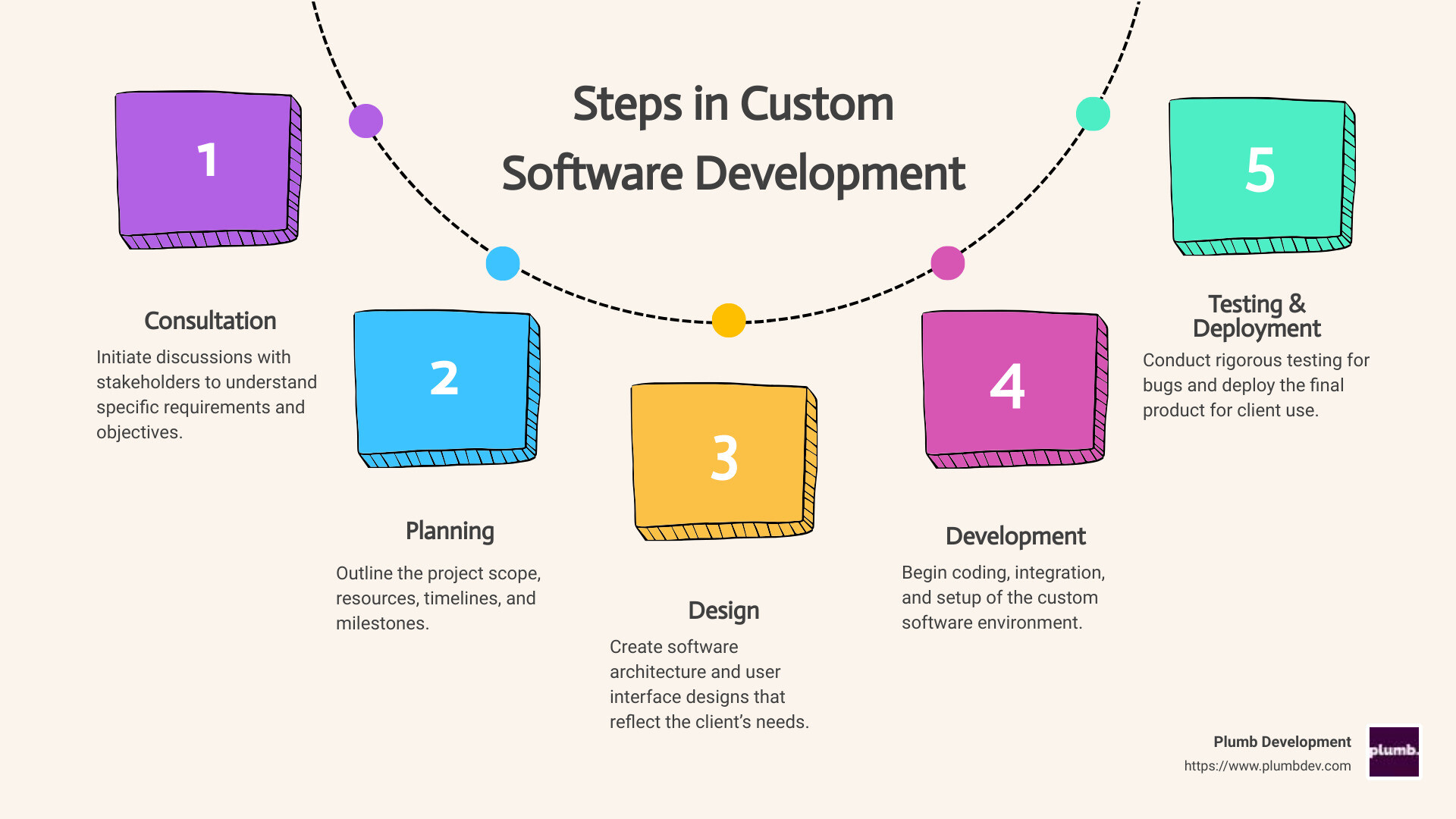
In the dynamic digital landscape, investing in custom software development is not just about keeping up with technology trends but about actively propelling your business forward with tools that are crafted to elevate efficiency, function precisely as needed, and offer a strong return on investment.
Stay tuned as we delve deeper into understanding the what, why, and how of custom software development, ensuring you have the knowledge to make informed decisions for your business.
Understanding Custom Software Development
In the realm of business technology, what is custom software development? It's about creating solutions that fit like a glove. Let's break down what this means for your business.
Bespoke Software
Bespoke software is a custom-tailored suit in applications. It's designed from scratch based on your specific requirements. This means the software functions exactly how you need it to, without any unnecessary features that you'll never use.
Tailor-Made Solutions
Tailor-made solutions ensure that every aspect of the software is crafted to enhance your specific workflows and processes. This personalized approach not only boosts efficiency but also improves user experience, making it easier for your team to adopt and utilize the software effectively.
Application Customization
Sometimes, you don't need a whole new application—just significant modifications to existing software. Application customization involves tweaking and adding features to an existing system to make it serve your business better. This can be a cost-effective way to get custom software benefits without starting from scratch.
Modernization
Keeping up with the latest technology is crucial. Modernization involves updating your old systems to current standards, incorporating new functionalities, and making sure your business stays competitive in a rapidly evolving digital world.
Management
Effective software isn't just about development—it's also about ongoing management. This includes regular updates, security checks, and ensuring the software scales with your business. Good management helps prevent issues and ensures your software continues to perform optimally over time.
Understanding custom software development means recognizing that it's not just about building software. It's about creating a strategic asset for your business. By investing in software tailored to your specific needs, you're setting your business up for greater efficiency, sharper competitive edge, and better overall performance.
We'll explore the key benefits of opting for custom software development, helping you understand why it might just be the best decision for your business's future.
Key Benefits of Custom Software Development
When considering what is custom software development, it's important to understand the significant advantages it can offer to your business. Here are some of the key benefits:
Competitive Advantage
Custom software is designed specifically for your business needs, which means it can provide features that no off-the-shelf software can. This exclusivity can give your business a competitive edge in the market. By having software that is unique to your operations, you can perform tasks more efficiently than your competitors.
Efficiency
Custom software is streamlined to fit into your business processes, eliminating unnecessary features that can slow down operations. This leads to greater efficiency in daily tasks. For instance, automating repetitive tasks can free up your staff’s time for more important duties, increasing productivity.
Scalability
As your business grows, your software needs will change. Custom software can evolve in line with your business, ensuring that it always supports your operations effectively. This scalability means that you don't need to switch to new software as your business expands, saving you time and money.
Reduced Costs
Although the initial investment in custom software may be higher than purchasing off-the-shelf solutions, it can lead to significant cost savings in the long run. You avoid ongoing licensing fees, and since the software is tailored to your exact needs, you spend less on features you don't need or use.
ROI
Investing in custom software can deliver a substantial return on investment (ROI). By increasing efficiency and productivity, custom software helps your business save money and generate more revenue. Additionally, it can reduce errors and operational costs, contributing further to your financial benefits.
Independence
With custom software, your business is not dependent on the software provider’s vision, timelines, or survival. You have complete control over the features and can update or modify the software as needed without waiting for a vendor to release the next version. This independence can be crucial for businesses in fast-changing industries.
Understanding these benefits helps underline the importance of custom software development. It's not just about having new software; it's about creating a tool that aligns perfectly with your business goals and processes, enhancing your ability to succeed in a competitive landscape. We'll delve into situations that particularly call for custom software solutions, ensuring you know when it's the right choice for your business needs.
When to Opt for Custom Software
Choosing the right time to invest in custom software can dramatically influence your business's efficiency and success. Here, we'll explore some key scenarios that typically require custom solutions: unique needs, specific challenges, business growth, and integration requirements.
Unique Needs
Every business has its own unique processes and requirements that set it apart from the competition. When off-the-shelf software cannot accommodate these unique aspects, custom software becomes a necessity. For instance, a company that designs bespoke furniture might need software that can detail custom orders, track unique materials, and manage customer-specific designs—all features unlikely to be supported by generic software.
Specific Challenges
Custom software is ideal for addressing specific operational or strategic challenges that are not adequately solved by existing solutions. For example, if a healthcare provider needs software that complies with specific medical regulations and also integrates patient data across multiple platforms, a custom solution would be necessary to meet these precise requirements.
Business Growth
As businesses grow, their processes often become more complex, requiring more sophisticated software solutions. Custom software can evolve alongside your business, ensuring scalability and flexibility. This adaptability helps manage increased operational demands without compromising performance or security.
Integration Requirements
Many businesses use a variety of software solutions that need to work together seamlessly. Custom software can be designed to integrate smoothly with existing systems, whether you're looking to enhance functionality or bridge gaps between disparate applications. This integration is crucial for maintaining data consistency and workflow efficiency across all business operations.
By recognizing these key scenarios, businesses can make informed decisions about when to invest in custom software development. This strategic approach not only addresses immediate needs but also sets the stage for long-term efficiency and growth. Moving forward, we'll look at the methodologies employed in custom software development, which play a vital role in the success of these projects.
Methodologies in Custom Software Development
When venturing into custom software development, understanding the methodologies involved is crucial. These frameworks guide the planning, execution, and delivery of software projects, each with its distinct advantages and challenges.
Agile Development
Agile Development is a modern approach that prioritizes flexibility and rapid iteration. Born from the Manifesto for Agile Software Development, this methodology emphasizes customer feedback and adaptability. Instead of a rigid plan, Agile encourages continuous evaluation and adjustment throughout the development process.
Key Points:- Customer Feedback: Regular input from users helps tailor the software to real-world needs.- Adaptability: Changes can be incorporated at any stage, allowing the software to evolve with the project's requirements.
Waterfall Model
The Waterfall Model is a more traditional method, characterized by a sequential approach to software development. This model divides the process into distinct phases, each dependent on the outputs of the previous one. It’s structured and predictable, making it easy to understand and manage.
Limitations:- Rigidity: Once a phase is completed, revisiting it can be costly and complex.- Feedback Loops: It lacks the flexibility to incorporate changes or feedback once a stage is completed.
Scrum
Scrum is a specific implementation of Agile that organizes work into sprints—short, consistent cycles that allow teams to deliver small chunks of functionality quickly. This framework includes roles such as the Scrum Master, who ensures the process runs smoothly, and the Product Owner, who represents the stakeholders' interests.
Scrum Activities:- Sprints: Typically last 2-4 weeks, focusing on a set of goals determined during sprint planning.- Scrum Masters: Guide the team and protect them from external disruptions.- Sprint Planning: Teams decide what to work on in the upcoming sprint, aligning tasks with project goals.
These methodologies, whether it’s the adaptability of Agile, the structured nature of the Waterfall Model, or the iterative sprints of Scrum, offer diverse approaches to custom software development. Each has its strengths and is chosen based on the project’s specific needs and goals. Understanding these methodologies is essential for selecting the right approach for your project, ensuring it aligns with your strategic objectives and business environment. Moving forward, we will explore some real-world applications of custom software across various industries.
Examples of Custom Software in Action
Custom software development tailors technology to fit the unique needs of businesses and industries. Let's delve into how different sectors utilize custom software to enhance operations, improve user experiences, and solve industry-specific challenges.
Aviation Software
Aviation software revolutionizes the way airlines and airports operate. From booking systems to flight management, custom software helps streamline operations and enhance passenger experiences. For instance, these systems allow travelers to effortlessly book flights, select seats, and check flight statuses from their devices. This not only improves customer satisfaction but also optimizes the workload on staff by automating routine tasks.
Custom eCommerce
Custom eCommerce platforms are crafted to meet the specific needs of online retailers. Unlike standard eCommerce solutions, these platforms can offer unique features like advanced custom product builders or augmented reality showrooms. For example, a custom eCommerce website might integrate tools that allow customers to design their own furniture or clothing directly on the website, providing a highly personalized shopping experience that stands out in the competitive market.
Business Management
Custom business management software can transform how a company operates internally. From project management tools to custom CRM systems, these solutions are designed to fit the precise workflow of an organization. By automating tasks, providing detailed analytics, and facilitating better communication among departments, custom software in business management helps companies become more efficient and data-driven.
Voice Recognition (Siri)
Voice recognition technology like Apple's Siri uses custom software to provide users with a seamless interaction with their devices using voice commands. This technology can be adapted and integrated into various applications, making digital interactions more accessible and convenient. Siri, for example, helps users perform tasks such as sending messages, making calls, and setting reminders, all hands-free.
Learning Management Systems (LMS)
Custom Learning Management Systems (LMS) like Edmodo and Google Classroom are developed to address the unique needs of educational institutions. These platforms facilitate online learning, provide tools for assignments and grading, and offer forums for communication between students and teachers. Custom LMS solutions can be tailored to support the specific curriculum, teaching methods, and assessment strategies of an educational institution, enhancing both teaching and learning experiences.
Real-Time Transportation Tracking (Uber API)
Real-time transportation tracking systems such as those used by Uber demonstrate the power of custom software in logistics and personal transportation. The Uber API integrates various functionalities like mapping, billing, and driver selection into a seamless service for users and drivers. Custom software solutions in this area help improve operational efficiency, customer satisfaction, and system reliability by providing real-time data and user-friendly interfaces.
Each of these examples showcases the transformative impact of custom software development across different sectors. By addressing specific user needs and industry challenges, custom solutions not only enhance operational efficiency but also offer competitive advantages in the market. As businesses continue to evolve, the role of custom software in driving innovation and efficiency remains crucial. Moving forward, we'll address some frequently asked questions about custom software development to further clarify its benefits and applications.
Frequently Asked Questions about Custom Software Development
What is meant by custom software?
Custom software is a type of software that is specifically designed and developed to meet the unique needs of an organization or user. Unlike off-the-shelf software, which is made for a broad audience, custom software is tailor-made to fit the specific requirements of a business, ensuring that all particular preferences and functionalities are covered. This approach allows businesses to achieve more precise solutions for their operations.
What is the benefit of custom software development?
The benefits of custom software development are numerous:- Tailored Solutions: Businesses get software that is specifically designed for their processes, which can significantly boost productivity and efficiency.- Competitive Advantage: Custom software can provide unique features that set a company apart from its competitors.- Scalability: As a business grows, its software can be adapted to handle increasing workloads or new processes without the need to purchase new software.- Integration: Custom software can be built to integrate seamlessly with existing tools and systems, reducing the likelihood of integration issues.- Cost-Effectiveness Over Time: Although the initial investment might be higher, custom software does not require continuous licensing fees and can be more cost-effective in the long run.
What is the meaning of custom application development?
Custom application development refers to the process of designing, creating, and deploying software applications that are specifically crafted to support specific user requirements or organizational functions. This process involves understanding detailed needs, designing a suitable architecture, coding the application, and continuous testing to ensure the application performs well across all intended use cases. It's about creating solutions that are not just functional but also well aligned with the business’s strategic goals.
Each of these aspects underscores the importance of approaching software development not just as a technical task, but as a strategic tool that can significantly influence business outcomes. As technology continues to evolve, the role of custom software in driving business innovation and efficiency is more crucial than ever.
Conclusion
Investing in custom software development is more than just a financial decision; it's a strategic move that can define the future of a business. By choosing to develop custom software, businesses can address their unique challenges with precision, enhance their operational efficiency, and secure a competitive edge in their industry.
At Plumb Development, we understand the transformative power of custom software. Our approach is centered on empowering our clients through technology-driven solutions that are meticulously tailored to their specific needs. We believe that the right software acts not just as a tool, but as an integral part of your business that grows and evolves with you.
Our commitment to custom software development is about more than delivering a product—it's about forging partnerships that bring visionary ideas to life. We collaborate closely with our clients to ensure that every piece of software we develop is not only a solution but a stepping stone to greater business success.
By focusing on a thorough understanding of your business needs and the latest technological advancements, we ensure that your investment in custom software yields sustainable benefits. This strategic focus is designed to enhance your operational capabilities and enable you to adapt to changing market dynamics effectively.
Discover how Plumb Development can help you turn your unique business challenges into opportunities with custom software tailored just for you. Explore our Custom Software and Application Development Services and let’s start shaping the future of your business together.
In conclusion, the journey of custom software development is one of innovation and strategic foresight. With Plumb Development, you gain more than a software solution; you gain a partner committed to your long-term success. Let us help you harness the power of custom software to not only meet but exceed your business objectives.