
Introduction
If you're wondering how much does custom software development cost, you're not alone. Many business owners grapple with this question. The cost of custom software development can range widely, influenced by multiple factors. Here's a quick snapshot:
- Small projects: $5,000 – $20,000
- Mid-range projects: $20,000 – $50,000
- Large-scale projects: $50,000+
Custom software development is a significant investment in technology. But understanding the comprehensive costs and planning your budget wisely can help you make informed decisions.
What Affects the Costs?
From the platform you choose to the complexity of the software, several variables can impact the final price. Each factor will play a role in shaping the total expenditure, and knowing these elements can guide you better in your budget planning.
Planning Your Budget
It’s crucial to allocate adequate resources, not just for development but also for maintenance, updates, and ensuring security. The journey doesn’t end at deployment; maintaining the software is just as important to keep it running smoothly.
Investing Wisely
Investing in custom software should be seen as a strategic move for long-term scalability and flexibility. Although it might seem costly upfront, the tailored solution will likely yield significant returns by optimizing your operations and enhancing customer engagement.

The Spectrum of Custom Software Development Costs
When it comes to custom software development, understanding the cost spectrum is crucial. The cost can vary significantly based on several factors, including project size, complexity, technology stack, and specific industry needs.
Average Cost Breakdown
Let's break it down based on project size:
1. Small Projects- Cost: $3,000 - $50,000- Examples: Basic marketplace apps, simple e-commerce platforms.- Time Frame: 2-3 months
2. Mid-range Projects- Cost: $50,000 - $200,000- Examples: Uber-like apps, Spotify-like apps.- Time Frame: 3-6 months
3. Large-scale Projects- Cost: $200,000 - $300,000+- Examples: Complex enterprise solutions, large-scale booking systems like Airbnb.- Time Frame: 6-9+ months
These estimates are based on the average rate in Central and Eastern Europe, which is $50-$70 per hour.
Influencing Factors
Several factors influence how much custom software development costs:
Software Size
- Small applications: 10-25 screens
- Mid-size applications: 25-40 screens
- Large applications: More than 40 screens
The more screens or pages, the more work required, thus increasing the cost.
Software Complexity
- Complex logic and advanced features mean more time coding and testing.
- Examples: Heavy data analysis, intricate algorithms.
Creative Design
- Design choices, like fonts, color palettes, and custom illustrations, can impact costs significantly.
- Budget: $15,000 – $30,000 for design planning and iterations.
Integration Needs
- Integrating with external systems (like payment providers or legacy systems) can be straightforward or challenging, affecting the cost.
- Common integrations: PayPal, Authorize.Net, credit check services.
Data Migration
- Moving data from an old system to a new one involves custom scripts and multiple testing phases.
- This process adds time and cost to the project.
Developer Location
- Costs vary based on the geographical location of the development team.
- Example: Central and Eastern Europe rates are $50-$70 per hour.
Team Composition
- Teams typically include business analysts, developers, designers, QA engineers, and project managers.
- Experience levels (junior, middle, senior) impact hourly rates and overall project cost.
Industry-Specific Solutions
Different industries have unique requirements that influence costs:
- Healthcare: $75,000 to $250,000+
- Logistics: $50,000 to $250,000+
- Fintech: $90,000 to $300,000+
Understanding these factors can help you better plan and budget for your custom software development project. Next, we will explore how to calculate your custom software development costs effectively.
Calculating Your Custom Software Development Costs
Steps to Estimate Costs
Estimating how much custom software development costs can feel like piecing together a puzzle. Let's break it down step by step.
Project Brief
Start with a project brief. This is a high-level document that outlines the goals, target audience, and key features of the software. Think of it as the blueprint for your project. It helps everyone involved understand the scope and purpose.
Technology Selection
Next, choose the technology stack. This includes the programming languages, frameworks, and tools you'll use. Different technologies have different costs and capabilities. For example, developing a mobile app in Swift for iOS might cost more than using a cross-platform tool like Flutter.
Software Requirements Specification (SRS)
Draft a Software Requirements Specification (SRS) document. This detailed document describes the functionalities, performance, and constraints of the software. It serves as a guide for developers and helps in creating accurate cost estimates.
UI Wireframes
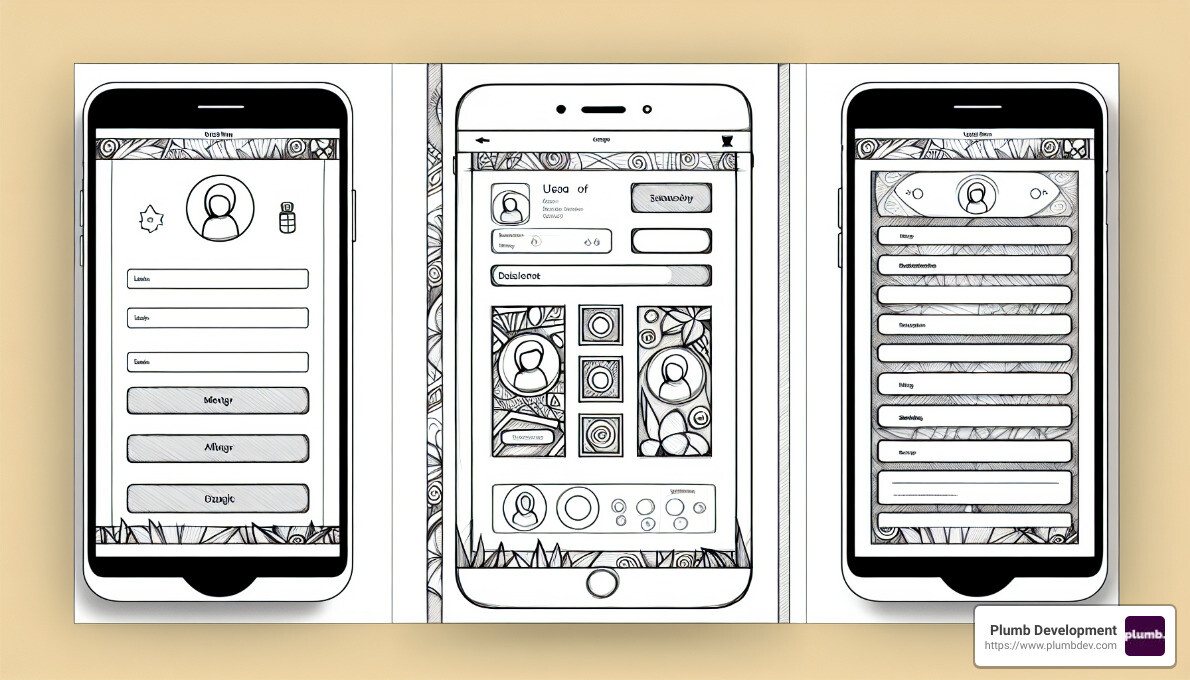
Create UI wireframes. These are simple, black-and-white layouts of your app's screens. They show the basic structure and flow without getting into design details. Wireframes help in visualizing the app and making early adjustments.
UI Prototype
Develop a UI prototype. This is a more detailed, interactive version of your wireframes. It includes colors, fonts, and other design elements. Prototypes help in user testing and refining the design before development starts.
Work Breakdown Structure (WBS)
Finally, create a Work Breakdown Structure (WBS). This is a detailed list of all tasks needed to complete the project. Each task is broken down into smaller, manageable parts. The WBS helps in assigning tasks, estimating time, and calculating costs.
Create Project Brief
To kick off, gather your team and stakeholders to draft the project brief. Include:
- Objectives
- Target audience
- Key features
- Expected outcomes
Keep it concise but comprehensive. This document will guide the entire project.
Select Technologies
Based on your project brief, select the appropriate technologies. Consider:
- Platform (web, mobile, desktop)
- Programming languages
- Frameworks
- Tools
Discuss with your development team to ensure the chosen stack aligns with your goals and budget.
Draft SRS Document
Work with your team to draft the SRS document. Include:
- Functional requirements
- Non-functional requirements
- Constraints
- Performance criteria
This document ensures everyone is on the same page and helps prevent scope creep.
Design UI
Begin with wireframes to outline the basic structure. Once approved, move on to creating a detailed UI prototype. This visual representation helps in:
- User testing
- Gathering feedback
- Refining the design
Create WBS
Break down the project into smaller tasks. Organize these tasks into a Work Breakdown Structure (WBS). Include:
- Task descriptions
- Estimated time for each task
- Resources needed
The WBS helps in planning, scheduling, and budgeting.
By following these steps, you can create a clear roadmap for your custom software development project. Next, we will discuss why custom software can be a strategic investment for your business.
Why Custom Software Can Be a Strategic Investment
Building custom software isn't just about solving a problem. It's about creating a strategic asset that can drive your business forward. Here's why investing in custom software can be a game-changer.
Long-term Scalability
Custom software is built to grow with your business. Unlike off-the-shelf solutions, which might not handle increased workload or user demands, custom software can be scaled. You control the architecture and can expand features as needed.
For instance, a financial firm that initially needs software for 50 users can later scale it to support 500 users without a hitch. This scalability ensures your investment remains valuable as your business grows.
Flexibility
When you build custom software, you get exactly what you need. No more, no less. This flexibility means the software can adapt to your unique workflows and processes.
Consider a logistics company. Off-the-shelf software might not integrate well with their existing systems. Custom software, however, can be designed to fit like a glove, enhancing efficiency and reducing manual work.
Custom vs. Off-the-Shelf Software
Off-the-shelf software can be cheaper upfront but often comes with limitations. It might lack specific features your business needs or require costly modifications. In contrast, custom software is tailored to your exact requirements from day one.
Thayer Tate, Chief Technology Officer at SOLTECH, highlights that custom software, while more expensive, aligns perfectly with business needs, offering a higher return on investment (ROI) over time.
Bespoke Solutions
Custom software offers bespoke solutions that address specific pain points. For example, a healthcare provider might need a custom patient management system that integrates seamlessly with their existing medical records. This bespoke approach ensures the software meets all regulatory requirements and enhances patient care.
Addressing Challenges and Risks
Custom software development isn't without its challenges. Here are key areas to watch out for:
Budget Overruns
Custom software projects can exceed initial budgets. To mitigate this, create a detailed project plan with clear milestones and regular check-ins. This keeps the project on track and within budget.
Scheduled Milestones
Setting and adhering to milestones is crucial. Break the project into phases, each with its own timeline and deliverables. This phased approach helps manage expectations and ensures steady progress.
Communication with Development Team
Effective communication is key. Regular updates, clear requirements, and open channels for feedback can prevent misunderstandings and keep the project aligned with business goals.
In summary, investing in custom software can provide long-term benefits, from scalability and flexibility to bespoke solutions tailored to your needs. However, manage risks like budget overruns and ensure clear communication with your development team.
Next, we will explore how to control custom software development costs.
How to Control Custom Software Development Costs
Designing to Budget
When it comes to custom software development, costs can quickly spiral out of control if not managed properly. Here’s how you can design your project to stay within budget:
Optimizing Team Size
A typical development team includes a business analyst, frontend and backend developers, a UI/UX designer, a QA engineer, and a project manager. However, not every project needs a full-time commitment from all these roles. For smaller projects, consider part-time or shared resources. This approach can significantly reduce costs without compromising quality.
Choosing the Right Technology Stack
The choice of technology stack has a direct impact on costs. Opt for well-established frameworks and tools that are widely supported and have a large talent pool. This reduces the learning curve and the risk of running into issues that require specialized expertise. For instance, using popular frameworks like React or Angular for frontend development can be more cost-effective compared to niche technologies.
Planning for Integration
If your application needs to interact with other systems (e.g., payment gateways, CRM systems), plan these integrations carefully. Reusing existing APIs and third-party services can save time and money compared to building everything from scratch. However, ensure that your development team has the expertise to handle these integrations smoothly.
Considering Outsourcing
Outsourcing can be a cost-effective strategy, especially if you choose regions with lower labor costs. For example, hourly rates for developers can range from $20 to $200 depending on geography. However, it’s crucial to select a partner with a proven track record and to ensure clear communication and management structures are in place.
Prioritizing Features
Not all features are created equal. Use a prioritization framework like MoSCoW (Must have, Should have, Could have, Won’t have) to focus on essential features first. This helps in delivering a Minimum Viable Product (MVP) quickly, which can then be iterated upon based on user feedback.
Strategic Planning
Strategic planning involves setting clear goals, timelines, and milestones. Break down the project into smaller, manageable chunks. This not only makes it easier to track progress but also allows for adjustments without derailing the entire project.
Adjusting Project Scope
Be flexible with your project scope. As development progresses, you might find that some features are less critical than initially thought. Adjusting the scope can help keep the project on track and within budget. Regularly review the project scope with your development team to ensure alignment with business goals.
By following these strategies, you can control costs effectively while still delivering a high-quality custom software solution. Next, let's dive into some frequently asked questions about custom software development costs.
Frequently Asked Questions about Custom Software Development Costs
Is custom software expensive?
Yes, custom software can be expensive. The cost is influenced by several factors including complexity, design, and the specific needs of your business. For example, Thayer Tate, CTO of SOLTECH, points out that custom software involves a team of designers, developers, project managers, and testers—all working to create a solution tailored to your needs. This labor-intensive process is both time-consuming and costly.
Additionally, custom software often requires ongoing maintenance, support, and updates to accommodate future growth. These costs can add up over time, making custom software a significant investment compared to off-the-shelf solutions.
How much does it cost for a small business?
The cost of custom software for a small business can vary widely. On average, small businesses can expect to spend between $75,000 to $100,000. This estimate can increase based on the complexity and specific features required.
According to research, the cost is influenced by:
- Software size and complexity: More screens and features mean higher costs.
- Developer location: Developers in the USA charge around $90-$100 per hour, while developers in India might charge $40-$50 per hour.
- Project urgency: Expedited timelines can increase costs due to overtime work and resource allocation.
Why is custom software more expensive than licensing existing software?
Custom software is more expensive than licensing existing software for several reasons:
- Individualized Development: Custom software is tailored to meet specific business needs, requiring a unique development process that involves extensive planning, design, coding, and testing.
- Team Involvement: A team of skilled professionals—including developers, designers, and testers—work on your project, driving up labor costs.
- Complex Requirements: Custom software often includes complex, unique requirements that demand advanced technical solutions and rigorous quality assurance.
- Ongoing Costs: Maintenance, support, updates, and potential user training add to the long-term investment.
Licensed software, on the other hand, offers a pre-built solution at a lower upfront cost, as development expenses are distributed across many clients. However, it may not align as precisely with your specific business processes and needs as custom software would.
By understanding these factors, you can better assess whether custom software is the right investment for your business.
Next, let's explore how to control custom software development costs effectively.
Conclusion
Strategic planning and making informed decisions are crucial when embarking on a custom software development journey. Understanding how much does custom software development cost involves more than just the initial price tag. It requires a holistic view that includes long-term maintenance, updates, and potential training for users.
Strategic Planning:
Proper planning helps in defining clear objectives and setting realistic timelines. It ensures that every dollar spent contributes to achieving your business goals. Start by outlining the specific needs of your business and the problems you aim to solve with custom software. This helps in creating a detailed project brief, which is the foundation of your development plan.
Making Informed Decisions:
Selecting the right technology stack and development team is essential. Evaluate the pros and cons of different platforms (e.g., iOS, Android, web) and choose the one that aligns best with your business objectives. Consider the long-term implications of your choices, including scalability and integration with other systems.
Plumb Development's Approach:
At Plumb Development, we bridge strategy and execution by offering a comprehensive suite of services tailored to your unique needs. Our process involves:
- Collaborative Planning: We work with you to create a detailed project brief and wireframes, ensuring that your vision is accurately translated into the software design.
- Expert Team: Our team comprises experienced professionals in various domains, from UI/UX designers to backend developers, ensuring a well-rounded approach to your project.
- Cost Transparency: We provide detailed estimates and honor our commitments, adding resources at our cost if needed to meet deadlines.
- Long-term Partnership: Beyond the initial development, we offer ongoing support and updates, ensuring your software remains competitive and functional.
By partnering with Plumb Development, you can navigate the complexities of custom software development with confidence. Our focus on strategic planning and informed decision-making ensures that your investment delivers tangible returns.
Ready to take the next step? Explore our solutions now.
This concludes our exploration of custom software development costs. The key to success lies in strategic planning, making informed decisions, and partnering with the right development team. At Plumb Development, we're here to help you every step of the way.