
Introduction
Custom healthcare software development services are transforming patient care by leveraging cutting-edge technology. Whether it's improving patient engagement, streamlining administrative workflows, or ensuring data security, custom software solutions are revolutionizing the healthcare industry.
Here are the key benefits of custom healthcare software development services:
- Enhanced Patient Care: Tailored solutions improve patient outcomes and experience.
- Operational Efficiency: Automation of administrative tasks saves time and reduces errors.
- Data Security: Custom software ensures compliance with HIPAA and other regulations.
Investing in custom healthcare software can provide significant advantages over off-the-shelf solutions. Custom development allows for more control, better integration with existing systems, and ultimately, a higher quality of patient care.
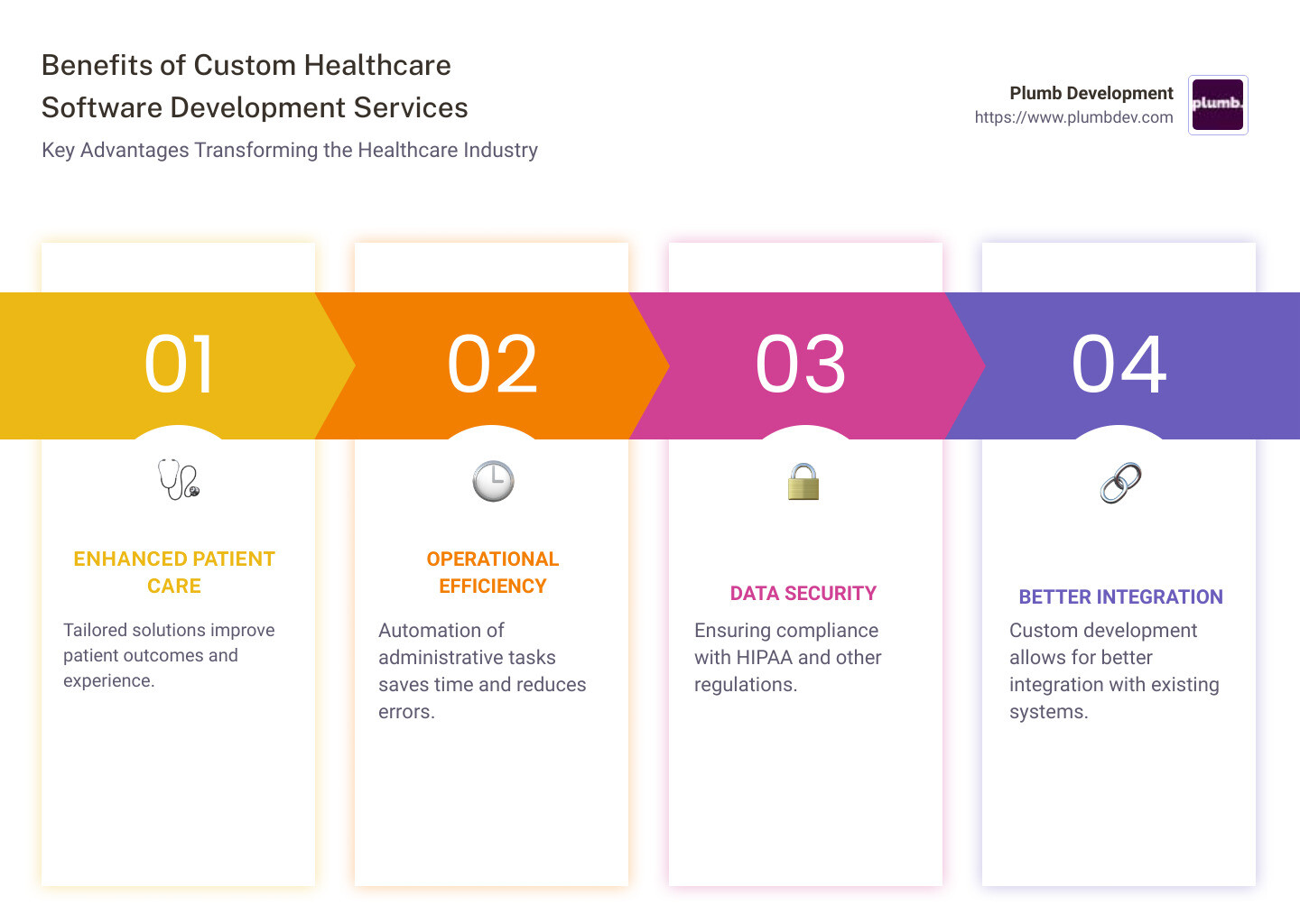
Benefits of Custom Healthcare Software Development Services
Enhanced Patient Care
Custom healthcare software can significantly improve patient care. Tailored solutions ensure that healthcare providers have the tools they need to deliver personalized and effective treatments. For example, a custom EHR (Electronic Health Record) system can be designed to highlight critical patient information, making it easier for doctors to make informed decisions quickly. According to ScienceSoft, their medical software covers 50+ app types, including cardiology and mental health, which shows the breadth of customization possible to meet specific medical needs.
Streamlined Administrative Tasks
Administrative tasks in healthcare can be overwhelming. Custom software solutions can automate repetitive tasks like billing, scheduling, and record-keeping. This not only saves time but also reduces the risk of human error. Langate emphasizes that automation frees up medical staff to focus more on patient care, rather than paperwork. Imagine a system that automatically sends follow-up reminders to patients or processes insurance claims without manual intervention—this is the power of custom healthcare software.
Optimized Clinical Workflows
Clinical workflows are the backbone of any healthcare facility. Custom software can streamline these processes, ensuring that everything from patient intake to discharge runs smoothly. For instance, integrating custom software with existing EHR systems can eliminate the need for double data entry, reducing errors and improving efficiency. According to OSP, they ensure seamless integration with healthcare workflows, which helps in creating a more efficient clinical environment.
Improved Operational Efficiency
Operational efficiency is crucial for the sustainability of healthcare organizations. Custom software solutions can be scaled to meet the evolving needs of healthcare providers. This means that as your practice grows, your software can grow with it, without the constraints of off-the-shelf solutions. BairesDev highlights that custom software allows for complete autonomy over features and updates, ensuring that the software continues to align with the unique demands of the organization.
Robust Data Security
Data security is a top priority in healthcare. Custom healthcare software can be designed with robust security measures to protect sensitive patient information. This includes data encryption, access controls, and compliance with regulations like HIPAA. OSP ensures compliance by implementing encryption protocols and conducting regular audits to safeguard patient data. Custom solutions can address specific security threats, making them more secure than generic software with known vulnerabilities.
Compliance with Industry Regulations
Healthcare software must comply with various regulations to ensure patient safety and data privacy. Custom solutions can be tailored to meet these requirements, providing peace of mind to healthcare providers. For example, ScienceSoft starts their projects by signing a Business Associate Agreement to comply with HIPAA guidelines, ensuring that the software meets all necessary legal standards from the get-go.
In summary, custom healthcare software development services offer numerous benefits, from enhancing patient care to ensuring data security and regulatory compliance. These tailored solutions provide healthcare providers with the tools they need to operate efficiently and effectively, ultimately improving the quality of care they offer to their patients.
Next, let's explore how custom healthcare software can enhance patient engagement and experience.
Enhancing Patient Engagement and Experience
Improving patient engagement and experience is crucial for modern healthcare. Custom healthcare software development services offer innovative solutions to achieve this. Let's explore some key areas:
Interactive Patient Experience
Creating an interactive patient experience can significantly improve patient satisfaction. Custom software can offer features like:
- Personalized Health Portals: Patients can access their medical records, schedule appointments, and communicate with healthcare providers through user-friendly portals.
- Educational Content: Providing patients with tailored educational materials about their conditions and treatments can empower them to take an active role in their healthcare.
AR/VR Solutions
Augmented Reality (AR) and Virtual Reality (VR) are revolutionizing patient care. These technologies offer immersive experiences that can enhance patient understanding and comfort.
- Virtual Consultations: Patients can meet with their doctors in a virtual environment, making consultations more accessible and less intimidating.
- Medical Training: AR and VR can be used to train medical staff, offering realistic simulations that improve their skills and confidence.
Remote Patient Monitoring
Remote patient monitoring is a game-changer for chronic disease management and post-operative care. Custom software solutions can include:
- Wearable Devices Integration: Devices like smartwatches and fitness trackers can monitor vital signs and send data directly to healthcare providers.
- Real-Time Alerts: Both patients and doctors can receive alerts if any concerning changes in health metrics are detected, allowing for timely interventions.
Patient Apps
Mobile apps provide a convenient way for patients to manage their health. Features often include:
- Medication Reminders: Patients receive notifications to take their medications on time.
- Symptom Tracking: Patients can log their symptoms, which helps doctors make more informed decisions during appointments.
- Telehealth Services: Apps can facilitate video consultations, making healthcare more accessible, especially for those in remote areas.
By leveraging these technologies, custom healthcare software development services can significantly enhance patient engagement and experience. This not only improves patient satisfaction but also leads to better health outcomes.
Next, let's explore how custom healthcare software can streamline administrative and clinical workflows.
Streamlining Administrative and Clinical Workflows
Custom healthcare software development services can transform the way healthcare facilities operate by streamlining both administrative and clinical workflows. Here are some key areas where these solutions can make a significant impact:
Automation
Automation is a game-changer in healthcare. By automating repetitive tasks, healthcare providers can focus more on patient care. For example, automating appointment scheduling reduces the need for manual input and minimizes scheduling errors. Similarly, automated reminders ensure patients don't miss their appointments, improving overall compliance.
Billing
Handling billing manually can be a headache. Custom software can automate billing processes, from generating invoices to tracking payments. This not only speeds up the process but also reduces errors. According to Langate, automating billing can free up hours that staff usually spend double-checking records and sending invoices.
Practice Management
Custom healthcare software can integrate various practice management tasks into one platform. This includes patient registration, appointment scheduling, and even inventory management. By consolidating these tasks, healthcare providers can operate more efficiently. For instance, integrated practice management systems can help track patient flow, manage staff schedules, and maintain inventory, all from a single dashboard.
EHR Integration
Electronic Health Record (EHR) integration is crucial for seamless healthcare delivery. Custom software can integrate with existing EHR systems, ensuring that patient data is easily accessible and up-to-date. This integration reduces the time spent on data entry and minimizes the risk of errors. According to ScienceSoft, seamless EHR integration can significantly improve the efficiency of medical workflows.
Reducing Errors
Errors in healthcare can be costly and even life-threatening. Custom software solutions can help reduce errors in various ways. For example, automated data entry minimizes the risk of human error. Additionally, decision support systems can provide healthcare providers with evidence-based recommendations, reducing the likelihood of misdiagnosis or incorrect treatments.
By streamlining these workflows, custom healthcare software development services not only improve operational efficiency but also enhance the quality of patient care.
Next, let’s dive into how these solutions ensure data security and compliance.
Ensuring Data Security and Compliance
When it comes to healthcare, data security and compliance are non-negotiable. Custom healthcare software development services play a crucial role in safeguarding sensitive patient information and ensuring adherence to regulatory standards. Here’s how:
HIPAA Compliance
HIPAA (Health Insurance Portability and Accountability Act) sets the standard for protecting sensitive patient data. Any company dealing with protected health information (PHI) must ensure that all the required physical, network, and process security measures are in place and followed. Custom software solutions can be designed to comply with HIPAA by:
- Implementing role-based access controls to ensure only authorized personnel can access sensitive information.
- Incorporating multi-factor authentication to add an extra layer of security.
- Ensuring thorough documentation of security practices for future audits.
Data Encryption
Data encryption is essential for securing sensitive patient information. Encryption transforms data into unreadable code that can only be deciphered by authorized parties, protecting it from unauthorized access. Custom healthcare software solutions often include:
- End-to-end encryption for data transmitted between healthcare professionals and stored in electronic health records (EHRs).
- Encryption protocols to safeguard data both in transit and at rest.
For example, Plumb Development implements robust encryption protocols in their healthcare software to ensure the highest standards of data security.
Cybersecurity
The healthcare industry is a prime target for cybercriminals due to the sensitive nature of the data involved. Custom healthcare software development services address these cybersecurity challenges by:
- Conducting regular security audits to identify and address vulnerabilities.
- Implementing access controls and authentication protocols to prevent unauthorized access.
- Developing incident response plans to quickly address and mitigate any data breaches.
A Forbes article highlights that healthcare data breaches cost an average of $9.23 million per incident, underscoring the importance of robust cybersecurity measures.
Regulatory Compliance
Beyond HIPAA, healthcare software must comply with various other regulations to ensure patient safety and data privacy. Custom software solutions can be tailored to meet these requirements, including:
- GDPR (General Data Protection Regulation) for protecting patient data in the European Union.
- FDA (Food and Drug Administration) regulations for medical devices and software.
- MDR (Medical Device Regulation) for ensuring the safety and performance of medical devices in the EU.
By incorporating these compliance measures, custom healthcare software ensures that healthcare providers can focus on delivering quality care without worrying about regulatory pitfalls.
Next, we’ll explore how leveraging advanced technologies can further transform patient care through custom healthcare software solutions.
Leveraging Advanced Technologies in Healthcare
Artificial Intelligence (AI) and Machine Learning (ML)
AI and ML are revolutionizing healthcare by providing powerful tools for diagnosis, treatment, and patient management. These technologies can analyze vast amounts of data quickly, identifying patterns and making predictions that assist doctors in making informed decisions.
For example, AI algorithms can detect early signs of diseases in medical images, such as X-rays or MRIs, with high accuracy. This not only speeds up the diagnostic process but also reduces the chances of human error.
Internet of Medical Things (IoMT)
The Internet of Medical Things (IoMT) refers to the network of medical devices and applications that connect to healthcare IT systems via the internet. This connectivity allows for real-time monitoring and data collection, which is crucial for patient care.
Wearable devices like heart rate monitors and glucose sensors can provide continuous data to healthcare providers, enabling them to make timely interventions. This real-time monitoring improves patient outcomes and enhances the efficiency of care delivery.
Data Analytics
Data analytics in healthcare involves analyzing large datasets to uncover insights that can improve patient care and operational efficiency. By leveraging data analytics, healthcare providers can identify trends, predict patient needs, and optimize resource allocation.
For instance, predictive analytics can help in forecasting patient admissions, allowing hospitals to manage staffing and resources more effectively. This proactive approach ensures that patients receive timely care, reducing wait times and improving overall satisfaction.
Virtual Reality (VR) and Augmented Reality (AR)
VR and AR technologies are transforming the way medical professionals are trained and how patients receive care. VR can simulate real-life medical scenarios, providing a safe environment for training medical students and professionals.
AR, on the other hand, can be used in surgical procedures to overlay critical information onto a surgeon's field of view. This enhances precision and reduces the risk of errors during complex surgeries.
Blockchain
Blockchain technology offers a secure and transparent way to manage patient data. By creating an immutable ledger of medical records, blockchain ensures that patient information is accurate and tamper-proof.
This technology is particularly useful for maintaining the integrity of electronic health records (EHRs) and ensuring that data is shared securely across different healthcare systems. Blockchain's transparency also helps in tracking the provenance of medical supplies, ensuring they are authentic and safe for use.
By integrating these advanced technologies, custom healthcare software development services can significantly enhance patient care, streamline operations, and ensure data security. Next, we’ll answer some frequently asked questions about custom healthcare software development services.
Frequently Asked Questions about Custom Healthcare Software Development Services
What is custom healthcare software development?
Custom healthcare software development involves creating tailor-made software solutions specifically designed to meet the unique needs of healthcare providers, patients, and other stakeholders in the healthcare ecosystem. Unlike off-the-shelf software, custom solutions are built from the ground up to address specific clinical workflows, administrative tasks, and patient care requirements. This approach ensures that the software is highly relevant and effective in improving operational efficiency and patient outcomes.
How much does custom healthcare software development cost?
The cost of developing custom healthcare software can vary widely based on several factors:
- Software Complexity: The more complex the software, the higher the cost. Complex functionalities like advanced EHR systems can cost over $2,000,000, while simpler applications like digital therapeutics can start at $100,000.
- Software Type: Whether the software is web-based, mobile, or desktop also affects the cost. Mobile apps might be less expensive than comprehensive web platforms.
- Number of Users: The expected number of users impacts the scalability requirements, influencing the overall cost.
- Integrations: The need to integrate with other IT systems or medical devices can increase development costs.
- Regulatory Compliance: Meeting regulations like HIPAA or GDPR adds to the complexity and cost.
- Performance, Security, Usability: High standards for these aspects can also drive up the price.
- Deployment Model: On-premises solutions might be more costly than cloud-based ones.
- Sourcing Model: In-house development can be more expensive than outsourcing to specialized firms.
How long does it take to develop custom healthcare software?
Project timelines for custom healthcare software development can also vary:
- Project Start: Discussions with healthcare IT experts can begin within 1–2 business days of your initial request, and the project can kick off within 1–3 weeks.
- MVP Release: A Minimum Viable Product (MVP) can be ready in 2–4 months. This allows for initial testing and feedback to refine the software.
- Software Versions: New versions and updates can be rolled out every 2–4 weeks, ensuring continuous improvement and adaptation to user needs.
Understanding these factors can help in planning and budgeting for custom healthcare software development services, ensuring that the final product meets your specific needs and regulatory requirements.
Conclusion
Custom healthcare solutions are transforming patient care in unprecedented ways. At Plumb Development, we specialize in creating tailored software that addresses the unique challenges of the healthcare industry. Our solutions are designed to enhance patient engagement, streamline administrative and clinical workflows, and ensure robust data security.
Digital transformation in healthcare isn't just a buzzword. It's a necessity. With advancements in AI, ML, and IoMT, healthcare providers can now offer more personalized and efficient care. Our custom software solutions harness these technologies to improve patient outcomes and operational efficiency.
Patient care is at the heart of what we do. By developing bespoke software, we empower healthcare providers to deliver better care, faster. Whether it's through interactive patient apps, remote monitoring tools, or seamless EHR integration, our solutions are built to meet the specific needs of your organization.
Partner with us at Plumb Development to embark on your digital transformation journey. Let's create custom healthcare solutions that not only meet regulatory requirements but also set new standards in patient care.
Ready to transform your healthcare services with technology? Explore our solutions now.