Digital marketing for financial services is like navigating a river with rapid currents. For SME owners aiming to boost online visibility and sales, understanding and leveraging digital marketing is the lifeline. Here’s a quick glance at what really matters:
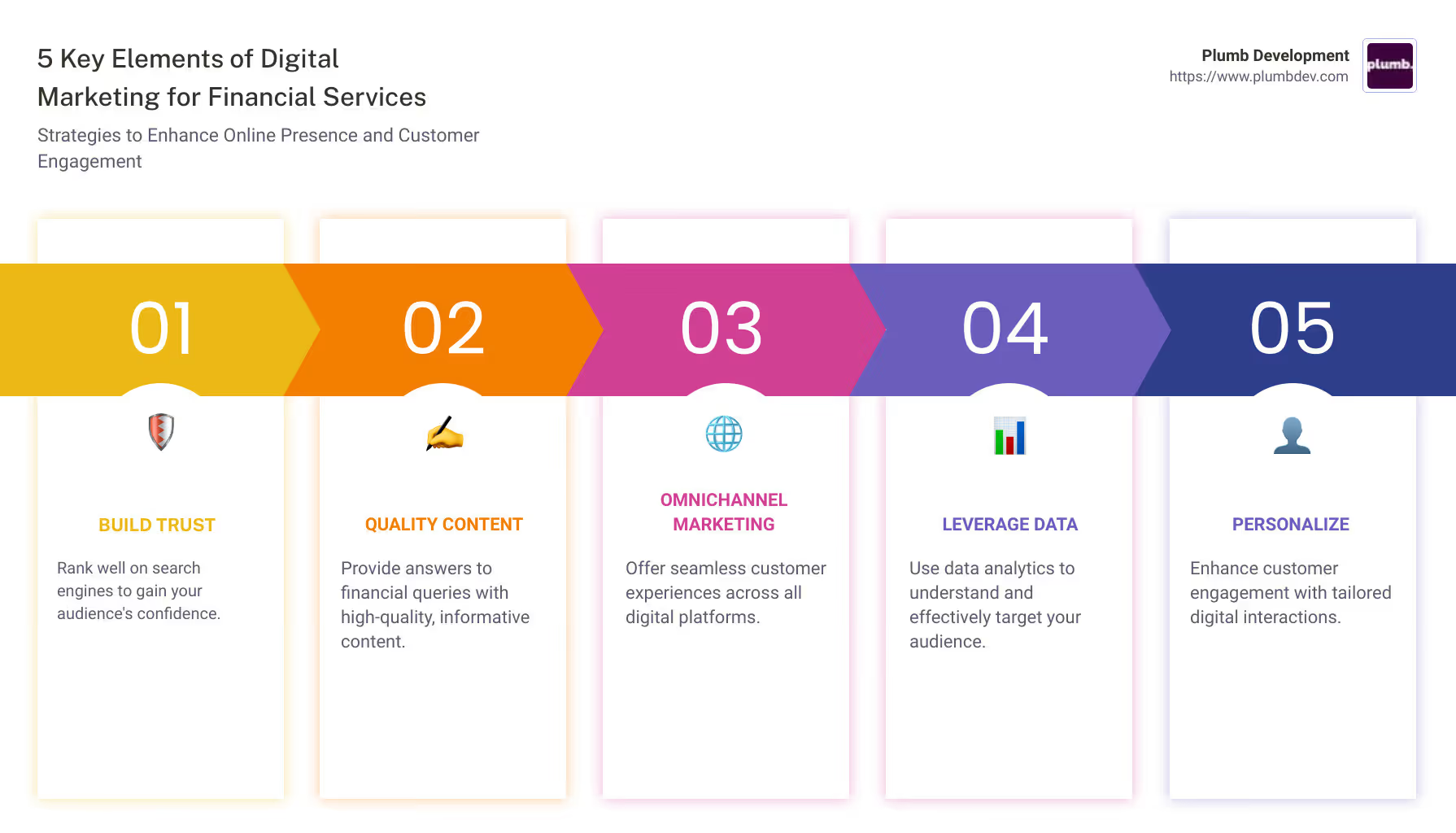
- Build trust with your audience by ranking well on search engines.
- Invest in quality content that answers your customer's financial questions.
- Embrace omnichannel marketing to ensure a seamless customer experience across all platforms.
- Leverage data to understand and target your customers more effectively.
- Personalize your digital interactions to enhance customer engagement.
- Stay compliant with all regulatory standards while marketing online.
The digital landscape for financial services is complex yet rewarding. In an era where trust is gold, and customer engagement defines success, digital marketing stands as the cornerstone of reaching and exceeding these goals.
For SMEs, cutting through the digital noise to reach potential customers requires not just presence but a strategic, engaging, and compliant online approach. With the right strategies, financial services can transform the digital challenge into a digital opportunity, fostering growth and ensuring customer satisfaction.
The Role of Digital Marketing in Financial Services
In the world of financial services, digital marketing plays a pivotal role in connecting with customers, building trust, and ensuring your brand stands out from the competition. Let’s dive into how digital marketing achieves this, focusing on customer engagement, trust building, visibility, and reaching potential customers.
Customer Engagement
Engaging with customers is no longer just about providing a service or a product; it's about creating an ongoing conversation. Digital platforms offer numerous ways to interact directly with your audience, from social media to personalized email marketing. For instance, social media isn’t just a tool for promotion; it’s a platform for conversation. Engaging content, timely responses to queries, and active participation in discussions can significantly enhance customer engagement.
Trust Building
Trust is the cornerstone of any financial service. With digital marketing, trust is built through transparency, quality content, and a strong online presence. Websites that rank well on Google are often seen as more credible by consumers. Your rank on Google serves as a trust signal to potential customers. Incorporating elements of E-A-T (Expertise, Authority, Trustworthiness) in your content can significantly boost your site's perception as a trustworthy source of financial information.
Visibility
Visibility is synonymous with existence. If your potential customers can’t find you online, for all intents and purposes, your business doesn’t exist to them. SEO strategies play a crucial role in enhancing online visibility. By optimizing your content for search engines, you can ensure that your services appear at the top of search results, making it easier for potential customers to find you. Additionally, targeted advertising on social media and search engines can increase your brand's visibility among specific demographics.
Potential Customers
Reaching potential customers is about understanding where they spend their time online and how they search for financial services. Data-driven marketing, leveraging tools like Google Analytics and social media insights, can help you understand your audience better. With this knowledge, you can tailor your digital marketing strategies to reach those most likely to be interested in your services. Predictive analytics can also forecast customer behavior, allowing for more targeted and effective marketing efforts.
In conclusion, the role of digital marketing in financial services is multifaceted, focusing on engaging customers, building trust, increasing visibility, and reaching new potential customers. By leveraging digital platforms and technologies, financial services can create meaningful connections with their audience, establish themselves as trustworthy industry leaders, and navigate the competitive landscape effectively.
We will delve into the key strategies that can help financial institutions achieve these objectives through digital marketing, ensuring they not only meet but exceed customer expectations and industry standards.
Key Strategies in Digital Marketing for Financial Services
Omnichannel Marketing
In financial services, connecting with your customers wherever they are is crucial. Omnichannel marketing is about creating a seamless customer experience, whether they're interacting with you on social media, through your website, or in person at a branch. It's like being a friendly face in both the digital and physical world. The RACE Framework—which stands for Reach, Act, Convert, and Engage—guides this process, ensuring that every step of the customer journey is covered.
Data-Driven Marketing
Imagine you're a detective, and your clues are the data your customers leave behind. Data-driven marketing uses these clues (data) to make smart decisions. With predictive analytics and marketing AI, you can predict what your customers might do next and offer them exactly what they need before they even know they need it. It's about being one step ahead, ensuring your marketing efforts hit the mark every time.
Personalization
Nobody likes feeling like just another number. Personalization in digital marketing makes your customers feel special. By using AI personalization, you can create customized offers and tailored content that speak directly to individual needs and preferences. It's like giving a personalized gift to each of your customers; it shows you know and value them.
Conversational Engagement
Have you ever needed help and wished for a quick response? Conversational engagement tools like chatbots and voice assistance provide your customers with instant support. It's about being there for your customers, answering their questions, and guiding them, anytime and anywhere. This immediate, interactive form of customer support can significantly enhance the customer experience.
Compliance and Regulation
In the financial services industry, playing by the rules is not optional; it's essential. Compliance and regulation in digital marketing ensure that all communications meet the strict regulatory standards set by authorities. This might sound a bit dry, but it's actually about protecting your customers and your business. By focusing on secure marketing practices, you build trust and credibility, which are the foundations of lasting customer relationships.
By integrating these key strategies into your digital marketing efforts, you can create a more engaging, personalized, and compliant financial services experience. These strategies not only help in meeting the evolving needs of customers but also in navigating the complex regulatory landscape of the financial sector. These foundational elements will play a pivotal role in shaping the future of digital marketing in financial services, ensuring businesses not only survive but thrive in this dynamic environment.
The 4 P's of Marketing in Financial Services
In financial services, the 4 P's of marketing—Product, Price, Place, and Promotion—serve as the cornerstone of effective marketing strategies. Let's break down how these elements can be innovatively applied in the digital age to capture the attention of potential customers and retain existing ones.
Product Innovation
In financial services, product innovation is key to staying relevant. This means developing new financial products or enhancing existing ones to meet the ever-changing needs of consumers. For example, introducing a budgeting app that uses AI to offer personalized saving tips could address customers' growing demand for financial management tools.
Fact: Consumers are looking for financial services that not only meet their basic needs but also offer added value through technology and customization.
Price Strategy
Pricing in the digital age is more transparent than ever. Customers can easily compare rates and fees across multiple providers with a few clicks. Thus, financial institutions need to be strategic about their pricing models. This could mean offering tiered pricing based on usage or loyalty, or even adopting a freemium model for digital banking services to attract new users.
Quote: "The right price strategy not only reflects the value of the service but also matches the customer's willingness to pay." - A financial marketing strategist
Place (Distribution)
The "place" has evolved from physical branches to digital platforms. Financial services need to be where the customers are: online. This means having a robust online presence through an easy-to-navigate website, mobile banking apps, and active social media channels. Additionally, utilizing fintech partnerships can extend the reach of financial services into new digital ecosystems.
Statistic: Over 60% of banking customers now prefer digital channels to manage their financial activities.
Promotion Tactics
Promotion in the digital realm is all about reaching customers through the right channels with the right message. This involves leveraging SEO to improve visibility, engaging content marketing to educate and build trust, targeted email campaigns for personalized offers, and social media to engage with the community. Moreover, using data analytics to track the effectiveness of promotional activities ensures that financial services can adapt their strategies in real-time to optimize results.
By adapting the 4 P's of marketing to the digital landscape, financial services can not only meet the current demands of digitally savvy customers but also anticipate future trends. This approach ensures that financial institutions remain competitive and continue to grow in an increasingly crowded marketplace. As we look ahead, the integration of these marketing fundamentals with digital innovations will be crucial for the success of any financial service provider.
Leveraging Technology in Financial Services Marketing
In financial services, staying ahead isn't just about keeping pace with current trends; it's about anticipating the future and leveraging cutting-edge technology to meet your customers' evolving needs. Let's dive into how blockchain, artificial intelligence (AI), machine learning, and digital experience platforms are revolutionizing the way financial services market their products and engage with customers.
Blockchain: The Trust Builder
Imagine a world where every transaction is transparent, secure, and unchangeable. That's the promise of blockchain. In financial services marketing, blockchain can be a game-changer by providing a level of security and transparency that builds unparalleled trust with customers. For instance, when it comes to investments or transfers, blockchain technology can offer customers peace of mind knowing their transactions are secure and traceable.
Artificial Intelligence & Machine Learning: The Smart Marketers
AI and machine learning are like having a super-smart assistant who knows your customers better than they know themselves. These technologies can analyze vast amounts of data to predict customer behavior, tailor marketing messages, and even identify the best times to engage with potential leads. For example, AI can help financial services send personalized loan or credit card offers to customers at the moment they're most likely to need them, significantly improving conversion rates.
Digital Experience Platforms: The Engagement Hubs
Digital experience platforms are the modern marketplace where customers can explore, learn, and interact with financial services. These platforms use AI, machine learning, and analytics to provide a seamless, personalized experience for each user. Whether it's through a mobile app, a website, or a chatbot, these platforms make it easier for customers to access the services they need, when they need them. This not only enhances customer satisfaction but also drives loyalty and long-term engagement.
In Conclusion:
Leveraging technology in financial services marketing isn't just about adopting new tools; it's about creating a more engaging, secure, and personalized experience for your customers. The integration of blockchain, AI, machine learning, and digital experience platforms will not only set the standard for customer engagement but also redefine what it means to be a leader in the financial services sector.
As we transition to our next section, keep in mind that these technological advancements are not the end goal but the means to achieving greater customer satisfaction and loyalty in the competitive landscape of financial services.
Frequently Asked Questions about Digital Marketing in Financial Services
How Does Digital Marketing Contribute to the Finance Sector?
Digital marketing plays a huge role in the finance sector. It's like having a conversation with your customers without meeting them face-to-face. Here's how it helps:
- Reaches More People: With digital marketing, financial services can talk to lots of people at once, all over the world.
- Builds Trust: Sharing useful information and answering questions online helps customers trust your services.
- Keeps You in the Game: If everyone else is online and you're not, you'll be left behind. Being active online keeps you competitive.
- Understands Customers Better: Online tools and analytics let you see what your customers like and do. This means you can make better products and services for them.
What Are the 4 P's of Marketing in Financial Services?
The 4 P's are like the secret ingredients to making your marketing work. Here they are for financial services:
- Product: This is what you're offering, whether it's a loan, insurance, or investment advice. It's got to be something people need or want.
- Price: How much your service costs. It needs to be right; not too high that no one can afford it, but not so low that you can't make a profit.
- Place: This is where and how people can find your services. Nowadays, this means being online where everyone can find you easily.
- Promotion: This is how you tell people about your services. It could be through social media, emails, or online ads. The key is to get the word out there.
How Is Marketing Used in Financial Services?
Marketing in financial services is all about connecting with current and potential customers. It's used to:
- Inform: Tell people about new products or services.
- Engage: Keep conversations going with customers through social media, blogs, and forums.
- Educate: Help people understand complex financial topics with simple explanations.
- Promote: Share special offers or rates to encourage people to use your services.
Marketing for financial services is more than just ads. It's about creating a relationship with customers and being there when they need you, whether that's answering a question on Twitter or providing valuable advice through a blog post.
As we wrap up this section, digital marketing in financial services is all about meeting your customers where they are: online. With the right mix of the 4 P's, technology, and a bit of creativity, you can not only reach your customers but also engage with them in meaningful ways.
Conclusion
In the journey through digital marketing for financial services, we've uncovered the importance of an integrated strategy that aligns with customer expectations and leverages the latest technology. At Plumb, we understand that the digital landscape is not just a field to navigate—it's an opportunity to connect, engage, and grow.
Our approach at Plumb is centered around creating an integrated digital strategy. This means not only understanding the 4 P's—Product, Price, Place, and Promotion—but also how these interact within the digital ecosystem to create a seamless customer experience. We recognize that each element of your marketing strategy must work together, from omnichannel marketing that ensures your message is where your customers are, to leveraging data and AI for personalized experiences that resonate on a deeper level.
We believe in the power of technology as a driver for innovation in financial services marketing. Whether it's blockchain for secure transactions, AI for personalized customer journeys, or chatbots for instant customer support, we're here to help you harness these tools to not only meet but exceed customer expectations.
However, it's not just about the technology. At the heart of our strategy is a commitment to building trust and fostering relationships. In a sector as personal as financial services, customers need to know they can trust you with their most sensitive information. Our strategies are designed to build this trust, ensuring compliance and regulation are met with the highest standards, while also engaging customers in a conversation that matters to them.
Remember that the digital landscape for financial services is changing. Staying ahead requires not just a keen eye on the present but also a vision for the future. At Plumb, we're not just a service provider; we're your partner in navigating these changes. Our goal is to empower you with the strategies, tools, and insights needed to thrive in this digital age.
Discover how we can transform your digital marketing strategy and set your financial services brand apart. Let's create something impactful together. Explore our digital marketing and advertising services now.
Together, we can turn the challenges of today's digital landscape into tomorrow's opportunities. With Plumb by your side, the path to digital excellence is clearer than ever. Let's embark on this journey together, crafting strategies that not only meet the digital age head-on but also pave the way for a future of growth, innovation, and success.